

CBN (cannabinol) is a cannabinoid that forms as THC ages. It was the first cannabinoid ever isolated and today is marketed mainly as a sleep aid. Part of that is science, part of it is marketing. Here you'll find out how CBN forms, how it works, how much truth there is in the sleep claims and what to look out for with CBN products.
What is CBN?
CBN is a breakdown product of THC. The living plant produces hardly any CBN. It only forms later, when THC reacts with oxygen, is exposed to light and heat, or is simply stored for a long time. That's why old, poorly stored flowers or hash contain more CBN than fresh product.
The chain looks like this: the plant first produces THCA. Drying and heat turn it into THC. Over time, oxidation turns THC into CBN. For products, CBN is nowadays usually made deliberately from other cannabinoids, because it only occurs in flowers in small amounts.
How does CBN work?
CBN binds to the same receptors as THC, i.e. CB1 in the nervous system and CB2 on immune cells. At CB1, however, it is much weaker than THC. That's why CBN is considered mildly psychoactive. At usual amounts, most people don't notice a high, but this can change at high doses or in combination with THC.
We explain in detail how a cannabinoid interacts with the endocannabinoid system in our overview of cannabinoids.
Does CBN help you sleep?
This is the question most people are asking when they look up CBN. The honest answer: it isn't well proven.
Its reputation as a sleep aid comes partly from the experience that old flowers make you sleepier. But that can be explained in other ways too, such as altered terpenes or simply THC. A frequently cited study from the 1970s found a calming effect of CBN only in combination with THC, not on its own.
More recent human studies are small and deliver mixed results. Some participants reported sleeping through the night better, but clear effects compared with a placebo hardly showed up. Until larger studies are available, you shouldn't see CBN as a substitute for having sleep problems checked by a doctor.
What has been proven to help you fall asleep is less spectacular: fixed bedtimes, little screen time in the evening, no caffeine in the afternoon and a cool, dark bedroom.
Other effects: what research is looking into
In lab and animal studies, CBN is being investigated for anti-inflammatory, pain-relieving and appetite-stimulating properties. The results are interesting but preliminary. There is no robust evidence in humans for any of these effects, and CBN is not approved as a medicine.
CBN, CBD and THC compared
Origin: The plant produces THC and CBD directly. CBN only forms through the breakdown of THC.
High: THC is clearly intoxicating, CBN only mildly, CBD not at all.
Typical use: THC for its intoxicating effect, CBD for relaxation without a high, CBN mostly for the evening.
Legal situation in Germany: CBD is expressly excluded in the Consumer Cannabis Act (Konsumcannabisgesetz). CBN is not. You can read more about CBD in our article on CBD isolate.
Is CBN legal?
CBN is not individually named in either the Narcotics Act (Betäubungsmittelgesetz) or the Consumer Cannabis Act. Unlike CBD, however, it is not expressly excluded from the definition of cannabis either. If CBN comes from the cannabis plant, it may therefore fall under the rules for cannabis. The legal situation has not been conclusively clarified and depends on the specific product. So look for suppliers with transparent information and lab analyses. This section does not replace legal advice.
What to look out for with CBN products
Lab analysis: Check how much CBN is really included and whether the product contains THC. CBN products are often made from THC-containing material.
Drug tests: Possible THC residues can cause a positive drug test. If you might be tested at work or on the road, bear this in mind.
Dosing: Start low. Effect and tolerance vary from person to person, and alcohol or sleeping pills can intensify the sedating effect.
Advertising claims: Statements such as "cures sleep disorders" are dubious and not permitted in Germany.
For winding down: our indica strains
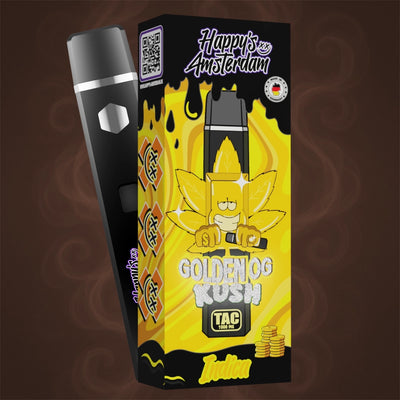
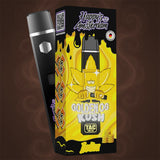
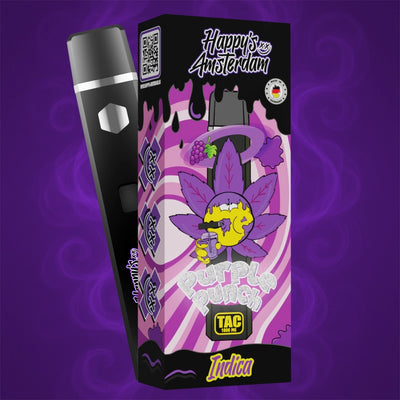
If you want to unwind in the evening, flavour and terpenes matter as well as cannabinoids. Our indica strains are made for exactly that: for example Purple Punch with its sweet berry flavour or Golden OG Kush with its earthy Kush profile. All TAC Vapes are free from nicotine and THC and are produced in Germany. Our article Terpene effects explains how terpenes such as myrcene and linalool contribute to relaxation.
Frequently asked questions about CBN
Does CBN get you high?
Barely. CBN is much weaker than THC. At high doses or together with THC, however, it can have a mild psychoactive effect.
How long does CBN last?
That depends on how you take it. When inhaled, the effect kicks in after a few minutes and lasts a few hours. Oils and edibles take longer to kick in but last longer.
Can you combine CBN and CBD?
Yes, many evening products contain both. Whether the combination works better than the individual substances is still scientifically open.
Why do old flowers contain more CBN?
Because over time, oxygen, light and heat break THC down into CBN. Stored airtight, dark and cool, flowers stay unchanged for much longer.