
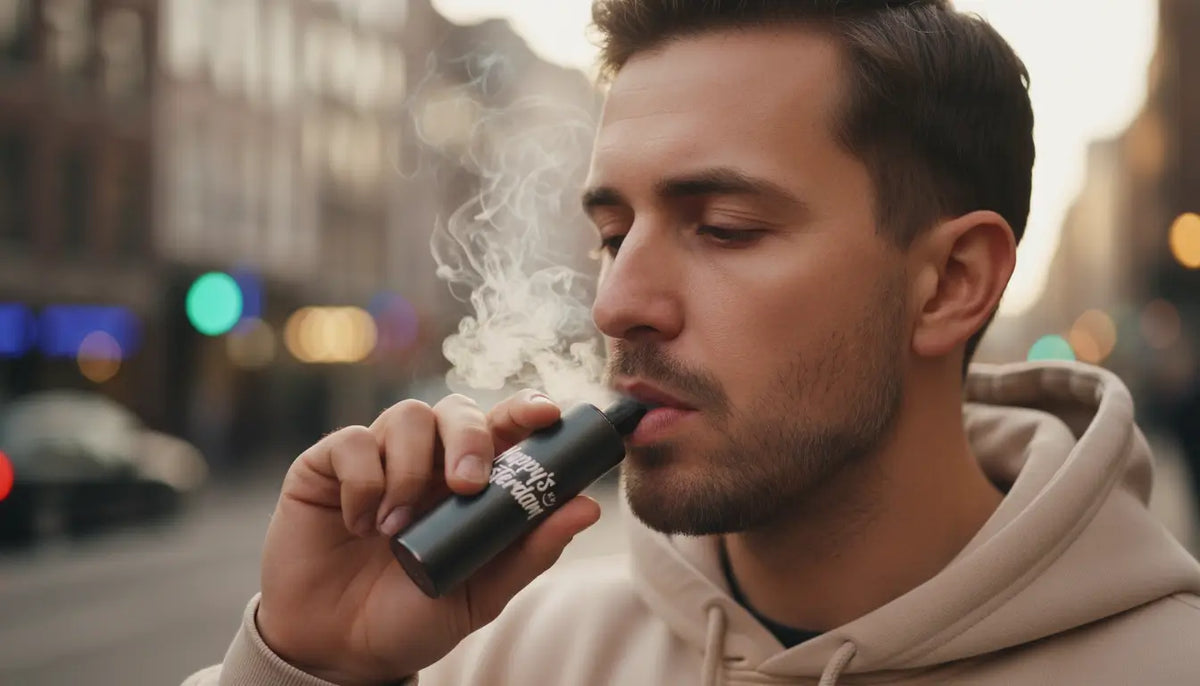
In Germany, 10-OH-HHC has been treated as prohibited since 2 December 2025. The trigger is the Sixth Ordinance Amending the Annex of the Neue-psychoaktive-Stoffe-Gesetz (NpSG, the German New Psychoactive Substances Act). This article explains what the legal texts say, what the ordinance does not regulate and where the limits of this classification lie.
Since when does the 10-OH-HHC ban apply?
The Sixth Ordinance was issued on 26 November 2025 and promulgated in the Federal Law Gazette on 1 December 2025 (BGBl. 2025 I No. 292). Under Article 2, it entered into force on the day after promulgation, that is, on 2 December 2025. It replaces the entire annex of the NpSG with a newly worded annex.
How does the NpSG regulate cannabinoids?
The NpSG does not prohibit individual substances by name but substance groups that are described by their chemical structure. For cannabinoids, this is the group of cannabimimetics and synthetic cannabinoids. A subgroup in number 2.3 of the annex covers “compounds derived from 6H-benzo(c)chromen-1-ol”, regardless of the degree of hydrogenation of ring A and with a defined selection of possible substituents.
10-OH-HHC is not named in the ordinance. In practice, it is treated as covered by this structural group. Whether an individual product actually falls under it is decided, in case of doubt, by authorities and courts on the basis of its structure.
What is prohibited under the NpSG and what penalties apply?
Section 3 (1) NpSG prohibits, among other things, trading, placing on the market, manufacturing, bringing into the country, acquiring, possessing and administering new psychoactive substances of the groups listed. Under section 3 (2), recognised uses for commercial, industrial or scientific purposes are exempt.
Section 4 NpSG provides imprisonment of up to three years or a fine for trading and manufacturing. In more serious cases, the penalty range is one to ten years. This applies, for example, to commercial activity, to supply to minors or if the health of many people is endangered (section 4 (3)).
What applies to HHC?
Since 23 May 2026, narcotics law also applies to HHC. The Twenty-seventh Ordinance Amending Annexes to the Narcotics Act (Betäubungsmittelgesetz, BtMG) of 19 May 2026 (BGBl. 2026 I No. 150) adds hexahydrocannabinol to Annex II of the BtMG. Exempt are cannabis for medical or medical-scientific purposes within the meaning of the Medical Cannabis Act and non-synthetic forms that are in circulation for non-medical purposes. Under Article 2, the ordinance entered into force on the day after promulgation.
What happens next legally?
The rules for cannabinoids are reviewed and adjusted regularly. According to the overview of the Federal Ministry of Health, the annex of the NpSG was most recently amended by the Sixth Ordinance. Reliable information is provided by the Federal Ministry of Health and the Federal Law Gazette. This article is not legal advice and reflects the status as of 6 October 2026.
Sources
- Neue-psychoaktive-Stoffe-Gesetz (NpSG), gesetze-im-internet.de (German)
- Sixth Ordinance Amending the Annex of the NpSG, BGBl. 2025 I No. 292 (German)
- Ordinances amending the annex of the NpSG, Federal Ministry of Health (German)
- Twenty-seventh Ordinance Amending Annexes to the BtMG, BGBl. 2026 I No. 150 (German)
- Annex II BtMG, gesetze-im-internet.de (German)