
Table of contents
- What are cannabinoids?
- How cannabinoids work: the endocannabinoid system
- The most important cannabinoids at a glance
- New cannabinoids: HHZ, H2, H3 and TAC
- Synthetic cannabinoids: the crucial difference
- Cannabinoids as medicines
- Risks and notes on use
- Cannabinoids at Happy's Amsterdam
- Frequently asked questions about cannabinoids
Cannabinoids are active substances that dock onto the endocannabinoid system in the body. The best known are THC and CBD, but the cannabis plant produces well over 100 of them. On top of that come cannabinoids made by the body itself and those created in the lab. Here you get a clear overview: which cannabinoids exist, how they work, how they differ and what to watch out for when buying.
What are cannabinoids?
The Konsumcannabisgesetz defines cannabinoids as constituents of cannabis that can bind to receptors of the endocannabinoid system. In practice, three groups are distinguished.
Phytocannabinoids come from the plant. These include THC, CBD, CBN and CBG. They form in the resin glands of the flowers, at first as acids such as THCA or CBDA.
Endocannabinoids are produced by your body itself. The most important ones are called anandamide and 2-AG. Among other things, they help regulate pain perception, appetite, sleep and mood.
Semi-synthetic and fully synthetic cannabinoids are made in the lab, either from plant substances such as CBD or completely artificially. This group is very mixed, from well-studied medicines to dangerous designer drugs.
How cannabinoids work: the endocannabinoid system
The endocannabinoid system is a signaling network found in almost all organs. It works with two well-researched receptors.
CB1 receptors sit mainly in the brain and nervous system. If a cannabinoid binds strongly to CB1, an intoxicating effect results. That is the reason why THC gets you high.
CB2 receptors are found mainly on immune cells. They play a role in inflammatory processes and do not cause intoxication.
How a cannabinoid works depends on how strongly it binds to these receptors and whether it activates or blocks them. CBD, for example, hardly binds directly to CB1 and therefore is not intoxicating. Many cannabinoids also act through other receptors, for example serotonin or TRPV1 receptors.
The most important cannabinoids at a glance
THC (Delta-9-tetrahydrocannabinol)
The main cannabinoid for the intoxicating effect. THC strongly activates CB1 and causes euphoria, relaxation, appetite and an altered sense of time. In high doses it can cause restlessness, a racing heart or anxiety. In the plant it is first present as THCA and only forms through heat.
CBD (cannabidiol)
The second big cannabinoid. CBD does not get you high and is often used for relaxation. As a medicine it is approved in the EU for certain rare forms of epilepsy. For many other advertised effects, reliable studies are missing. You can read more about the pure form in our article on CBD isolate.
CBN (cannabinol)
CBN forms when THC is broken down by oxygen, light and time. It is only weakly psychoactive. CBN is often marketed as a sleep aid, but the evidence is thin.
CBG (cannabigerol)
CBG is considered the origin of the other cannabinoids. Its acid form CBGA is the precursor from which the plant forms THCA, CBDA and CBCA. In mature flowers only a little CBG is left. It does not get you high.
CBC (cannabichromene)
A non-intoxicating cannabinoid that usually occurs in small amounts. CBC is mainly studied in basic research.
THCV and THCP
Two relatives of THC with a side chain of a different length. THCV tends to feel clear and short in a low dose, THCP binds to CB1 significantly more strongly than THC in lab experiments. You can find details in our articles on THCV and THC-P.
New cannabinoids: HHZ, H2, H3 and TAC
For some years now, new cannabinoids and blends have been continually coming onto the market. Mostly these are semi-synthetic compounds made from plant substances. Many names are trade names behind which there is not always a single, clearly defined substance.
We have explained individually how these substances differ and what defines them: HHZ, H3 Superior Blend and TAC. Research on new cannabinoids is still at the beginning. That makes transparent manufacturers who have their products tested in a lab all the more important.
Synthetic cannabinoids: the crucial difference
"Synthetic cannabinoids" usually means fully synthetic substances sold as smoking blends, Spice or soaked onto paper. Chemically they have little to do with cannabis. Many bind many times more strongly to CB1 than THC, and even small differences in dose can lead to seizures, heart problems or psychoses. In Germany, most of these substances are prohibited under the Betäubungsmittelgesetz and the Neue-psychoaktive-Stoffe-Gesetz (NpSG).
How to recognize disreputable products:
No lab analysis: Reputable providers present a certificate of analysis showing ingredients and levels.
Unclear ingredient information: Terms like "herbal blend" or "room fragrance, not for consumption" without exact details of the active substances are a warning sign.
Extreme promises: Anyone advertising "stronger than THC" and a guaranteed high rarely sells a tested product.
Cannabinoids as medicines
Some cannabinoids are approved as medicines, including dronabinol (THC), nabilone, the THC-CBD oral spray nabiximols and a CBD preparation for rare forms of epilepsy. Since April 2024, medical cannabis in Germany is no longer classed as a narcotic and can be prescribed on a normal prescription. Whether a treatment comes into question is decided by a doctor.
Risks and notes on use
Intoxicating cannabinoids impair reaction time and concentration. If you have consumed, you should not drive. With very frequent, heavy use, cannabinoid hyperemesis syndrome can occur, which comes with recurring severe nausea and vomiting. Intoxicating cannabinoids are off limits for pregnant and breastfeeding women and people under 18. If you take medication, you should clarify interactions with a doctor beforehand.
Cannabinoids at Happy's Amsterdam
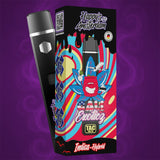
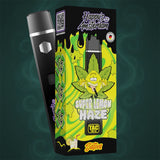
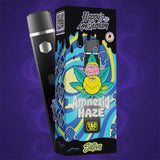
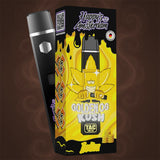
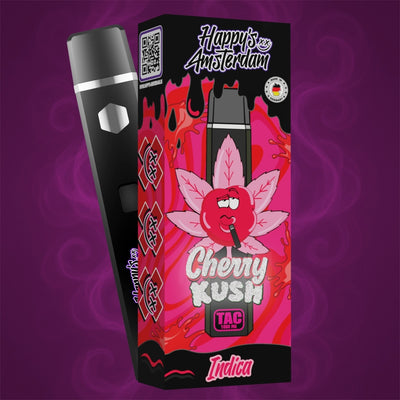
In our TAC Vapes we combine cannabinoids with strain-typical aromas, without nicotine and ready to use right away. Which strain suits you depends on what you are looking for. Our indica strains such as Cherry Kush are designed for quiet evenings, sativa strains such as Amnezia Haze for a fresher taste. How terpenes shape the experience is explained in the article Terpene effects. If you want to compare several strains, you will find suitable sets under Bestsellers and saver bundles.
Frequently asked questions about cannabinoids
How many cannabinoids are there?
Well over 100 cannabinoids have been identified in the cannabis plant. Most occur only in traces. In notable amounts, mainly THC(A), CBD(A), CBG and CBN are found.
Which cannabinoids do not get you high?
CBD, CBG and CBC are not intoxicating. CBN is only weakly psychoactive. THCA only intoxicates once it becomes THC through heat.
What is the legal status of CBD in Germany?
CBD is expressly excluded from the term cannabis in the Konsumcannabisgesetz. However, separate rules apply to individual product groups such as food or cosmetics. The legal situation can change, so check it where you live.
What is the difference between natural and synthetic cannabinoids?
Natural cannabinoids come directly from the plant. Fully synthetic cannabinoids are made artificially, are often much stronger and harder to dose. Semi-synthetic cannabinoids lie in between, because they are converted from plant substances.


