






Table of contents
- Vape, vaporizer & vape pen: understanding the terms correctly
- The most important differences between vape & vaporizer
- Vaporizer: definition, meaning and classification
- Vape: meaning in comparison
- Vape vs. vaporizer: important facts & classification
- Rule of thumb for vape vs. vaporizer
- Vape pen vs. vaporizer: final classification
- Conclusion: vape or vaporizer?
Vape or vaporizer? Many people who use a vape wonder whether a vaporizer might suit them better. And if you are just starting out, you probably face the question: What is the difference, and what is really worth it? In practice it quickly becomes clear: the most important difference lies in the material that is vaporized.
Both systems work on the same basic principle: vaporizing instead of burning. Still, they use different carrier substances, and that is exactly why the terms are often mixed up in everyday life. Here is the clear classification.
Vape, vaporizer & vape pen: understanding the terms correctly
A vape pen primarily describes a form factor (pen-shaped). This shape exists in both worlds, for classic vapes as well as for vaporizers. In common usage, however, it usually goes like this:
- Vaporizer = devices for dried herbs (dry herbs)
- Vape = devices for liquid e-liquids (e-cigarettes)
Experts from specialist retail often say: "It is not the design that decides, but the material that is vaporized."
The most important differences between vape & vaporizer
Although both terms describe heating, vape and vaporizer stand for different applications in practice. Technically, both produce vapor, but the naming depends mainly on the material.
- Vaporizer is used when it comes to dried herbs (e.g. cannabis flower or sage).
- Vape is the common term for e-cigarettes that vaporize liquids (PG/VG).
- A vape pen can be a hybrid, often for liquids or concentrates (oil/wax).
- In technical language, vaporizers mostly work with convection or conduction.
- In everyday life, "vape" is much more common as a collective term for liquid devices.

Vaporizer: definition, meaning and classification
What is a vaporizer?
In German-speaking countries, the term vaporizer is the technical term for herb vaporizers. A vaporizer heats plant material in a controlled way so that active substances are released, without combustion. Compared to the e-cigarette, "vaporizer" specifically means vaporizing natural substances.
Meaning and function of a vaporizer
A vaporizer works via convection (hot air) or conduction (direct contact). Experts often explain that exactly this control over temperature and extraction is the reason why vaporizers are considered the standard in the herb sector. In a direct vape vs. vaporizer comparison: a vaporizer has a chamber for flower, while a vape typically has a tank/pod for liquids.
A matching guide: Vaporizer: how often should you draw? Guide for beginners & experienced vapers
Typical use of the vaporizer
The term vaporizer is mainly used in contexts where plant substances are the focus:
- specialist retail for herb equipment
- aromatherapy (e.g. lavender or mint)
- patient counseling in the cannabis sector
- medical or scientific settings
Rule of thumb: Vaporizer mostly describes the device for herbs, technical and specialized.
Vape: meaning in comparison
What does vape mean?
In the comparison Vape vs. vaporizer, "vape" today mostly stands for the e-cigarette. The term has become established as a synonym for vaping liquids. It almost always means a device with a tank or pod that vaporizes a liquid.
How the term vape is used in everyday life
In everyday life, "vape" is a broad term: it can mean the device, the process and the lifestyle around vaping. Experts often say that exactly this broad usage causes terminological fuzziness, especially when it comes to vape pens.
If you are specifically looking for liquid and cartridge-like categories, here are suitable starting points:
Rule of thumb: Vape mostly refers to liquid e-liquids and e-cigarettes.
Vape vs. vaporizer: important facts & classification
The central point of the comparison: vaporizers use herbs, vapes use liquids. Not every device can do both. While vaporizers are often used in a (medical) context with flower, the vape is often a pleasure product for flavors.
A vape pen is often a hybrid. There are pens for liquids, but also special pens for concentrates such as oils or waxes. As a result, "vape" is often used in everyday life as an umbrella term for pen-shaped devices.
Rule of thumb for vape vs. vaporizer
Vaporizers are for herbs (dry herbs). Vapes are for liquids.
Whether vape pen or stationary vaporizer, what matters is always what goes into the chamber.
Vape pen vs. vaporizer: final classification
When comparing vape pen vs. vaporizer, it is mostly about the consistency of the material: a vape pen is often intended for extracts or liquids, while a classic vaporizer is designed for whole flower. The function stays the same (heating), but the chamber is optimized for the material in each case.
Reach for the vape if …
- you feel like trying different flavors and liquids
- you are looking for an uncomplicated lifestyle device
- the e-cigarette should be your everyday companion
Popular products:
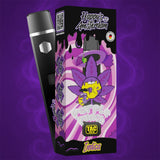
- Happy’s Amsterdam TAC Vape - Super Lemon Haze
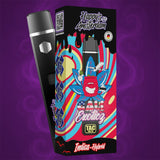
- Happy’s Amsterdam TAC Vape - Cali Exoticz
- Happy’s Amsterdam TAC Vape - Mango Safari
- Happy’s Amsterdam TAC Vape - Forbidden Fruit
- Happy’s Amsterdam TAC Vape - Moroccan Hash
Choose the vaporizer if …
- you want to vape real herbs and natural substances
- you value precise temperature control
- the purity of the active substances comes first for you
Experts say: "For flower, the classic vaporizer remains the standard device, because temperature control and chamber design are optimized for herbs."
If you want to dive deeper, these articles are helpful:
- TAC Vapes experiences & reviews
- TAC Vapes: what is really behind them?
- THC vapes and the legal situation
Conclusion: vape or vaporizer?
The difference lies not in marketing but in the material. For herbs, a vaporizer is the right choice; for liquids and everyday flavors, a vape is usually the better solution. Experts keep saying that a clean separation of terms helps not only with the buying decision but also with finding the right accessories and products.