




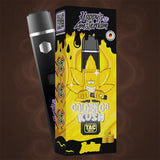






If you've been into vapes or hemp products lately, you've probably come across the term TAC—maybe while scrolling through a shop or chatting with friends. A lot of people think it's a new cannabinoid like THC or HHC. But that's not quite right.
TAC isn't a single active ingredient; it describes how many active cannabinoids are in a product overall. The abbreviation stands for "Total Active Cannabinoids"—meaning the total amount of all active compounds in an extract or vape.
Depending on the product, this can include THC, CBD, CBG, CBN, HHC, or THCP, for example. The TAC value—listed as a percentage (%) or milligrams per gram (mg/g)—shows how strong a product is overall, not just how much of one specific ingredient it has.
TAC Vapes aren't a new chemical compound—they're devices with a mix of cannabinoids. The TAC value tells you how "active" this mix is overall. The higher it is, the more cannabinoids are working together—which a lot of people say makes for a more well-rounded or complex experience.
In short: TAC stands for transparency, not a new molecule. It helps you understand products better and get a feel for their overall effect.
Is TAC legal?
The question of legality often causes confusion. TAC itself isn't legal or illegal—it's just a measurement. What matters is which cannabinoids are in the product.
Products that only contain legal cannabinoids like CBD or CBG are usually fine. But if a product contains THC or substances covered by narcotics laws, it can be illegal—no matter what the TAC value is.
Many TAC Vapes are currently in a gray area. New cannabinoids like HHC, THCP, or HHCP are regularly reviewed and sometimes banned later on. Switzerland and Austria have similar rules, but sometimes with different limits.
If you want to be sure, only buy certified products with up-to-date lab reports. These show exactly which cannabinoids are inside and whether they're within legal limits.
As long as manufacturers stick to these rules, TAC Vapes are currently legal to buy—but only if you're of legal age. Important: The legal situation can change at any time. It's worth staying up to date.
How does TAC work?
TAC doesn't work "on its own," but through its components. These cannabinoids affect the endocannabinoid system (ECS)—a network in your body that regulates things like sleep, mood, appetite, and how you feel pain.
When you use a TAC Vapes, you're taking in several cannabinoids at once. This combo is called the entourage effect. The substances can complement and boost each other—which often feels more balanced than using isolated compounds.
For example, CBD can have a calming effect, while CBG is more activating, and HHC or THCP can cause psychoactive effects. Depending on the mix, dosage, and your own tolerance, the effects can vary a lot.
This variety is what makes TAC interesting—but also legally complicated. Because it's not "TAC" itself that works, but the combination of its individual substances.
The difference between TAC and other cannabinoids
Unlike THC, CBD, or HHC, TAC isn't a chemical compound—it's a measurement.
If a vape, for example, contains 60% TAC, that means all the cannabinoids together make up 60% of the total mass. What makes up that percentage—which substances are included—determines the experience.
The difference is all about perspective: THC stands for a single effect, TAC for the sum. A high TAC can be legal or illegal—depending on what's inside. So TAC is more of a hint about strength, not about legal status.
Buy TAC Vapes online
If you want to try TAC Vapes for yourself, make sure to look for transparency and quality when buying. The TAC value alone doesn't say much – what's important is which cannabinoids are actually included.
Since laws and ratings can change regularly, it's worth buying from sellers who constantly check and update their product range. That way, you can be sure you're getting a clean and legal product.
Curious? Then check out our verified TAC Vapes and discover how versatile cannabinoid combinations can be – with clear labeling, lab analysis, and transparent quality.
Conclusion
TAC doesn't stand for a new cannabinoid, but for the total amount of all active cannabinoids in a product. It helps you better assess strength and composition – but doesn't say anything about the legality of individual substances.
In Germany, many TAC Vapes are currently legal as long as they don't contain banned substances like classic THC and are backed by lab analysis. Still, things are always changing – new substances, new ratings, new laws.
If you go for verified quality and keep yourself updated, you'll stay on the safe side. Bottom line: TAC stands for transparency – and helps you compare and enjoy products more consciously.